If you're searching for a free CRM in 2026, you're probably in a familiar spot. You want visibility into leads and deals, you want your team to stay organized, and you do not want to commit to expensive software just to get basic clarity.
The problem is that most "free" CRMs are only free on paper. They work fine at first, but quickly start gating important features, capping users, or forcing upgrades the moment your sales motion actually starts working.
This article breaks down the best free CRM options available today, what they are good at, where they fall short, and why Victoria's Sales Database has quietly become one of the most compelling free CRMs on the market.
What Actually Matters in a Free CRM
A good free CRM in 2026 is not about having every feature under the sun. It is about clarity, speed, and trust in your data.
At a minimum, a free CRM should let you see all your leads and deals in one place, understand what is happening across your sales process, and avoid manual busywork. If you constantly have to update records by hand or jump between tools to understand what is going on, the CRM is failing its job.
The best free CRMs today focus on being usable every day, not just impressive on a feature checklist.
HubSpot CRM
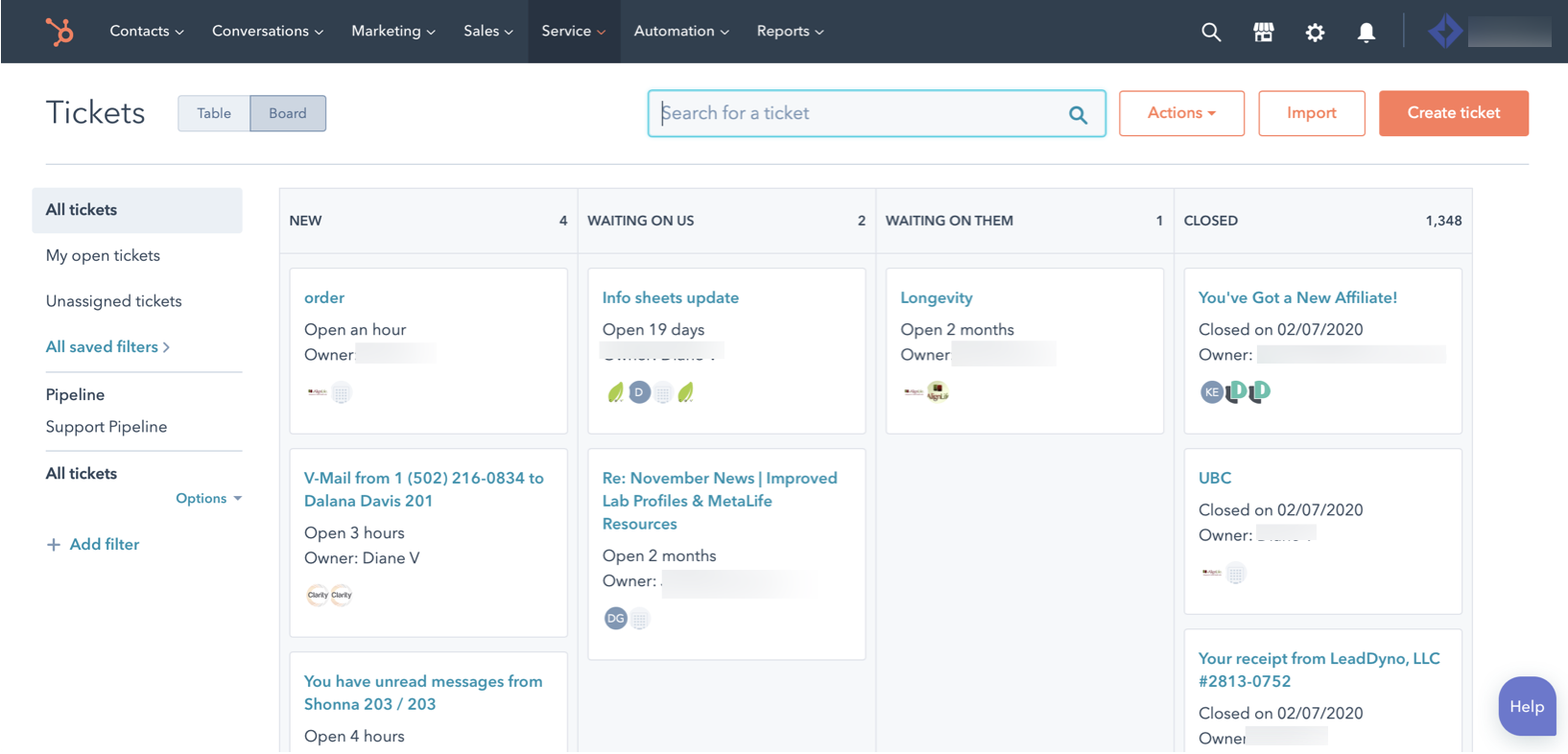
HubSpot remains the most widely used free CRM in the market, largely because it lowers the barrier to entry for teams that have never used a CRM before. According to HubSpot's own reporting, over 150,000 companies use its platform globally, and the free CRM is often the first touchpoint.
On the free plan, HubSpot includes contact and company records, deal pipelines, task management, email tracking, meeting scheduling, and basic reporting. For many teams, this covers the fundamentals. You can see who you are talking to, where deals sit, and what activity has happened without much setup.
Where HubSpot begins to show friction is as sales activity increases. Many commonly expected workflows, such as automated follow ups, advanced reporting, or deeper customization, are gated behind paid Sales Hub tiers. Reviews often describe the free CRM as "excellent to start, but restrictive once momentum builds." One G2 reviewer put it simply: "HubSpot's free CRM is great until you need it to actually work like a sales system."
HubSpot works best as an introductory CRM. It is reliable, polished, and easy to trust, but it is clearly designed to upsell as teams grow.
Zoho CRM
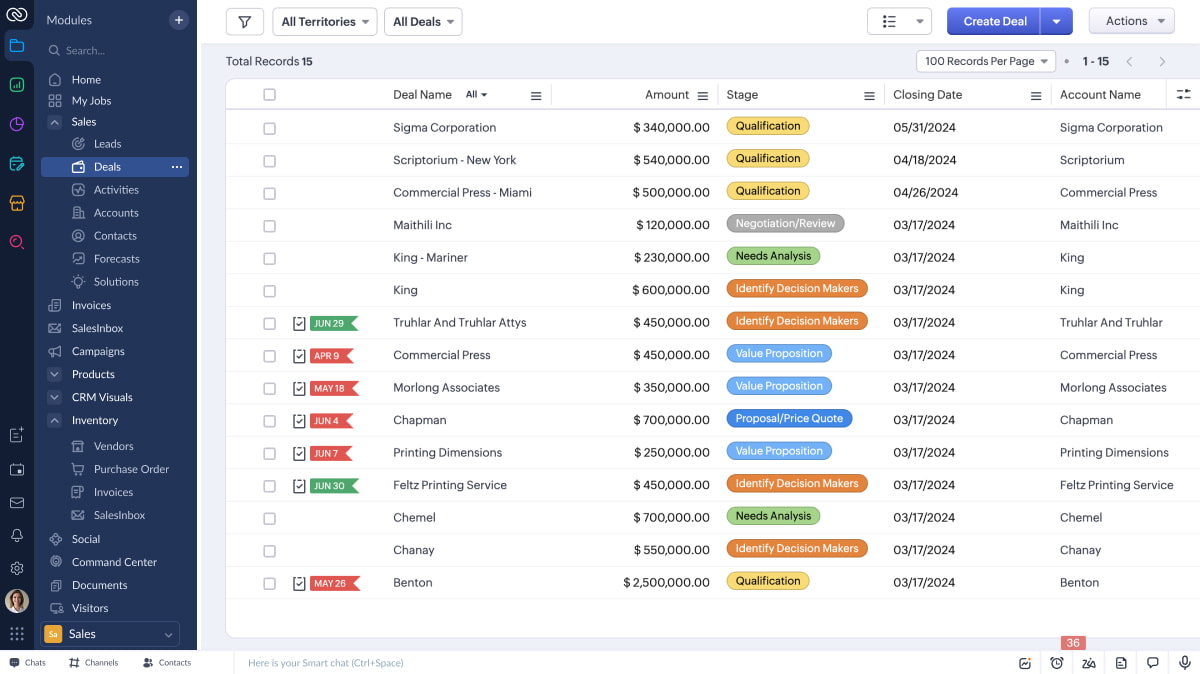
Zoho's free CRM is often praised for how much structure it offers without charging upfront. Unlike many free tools, Zoho includes lead management, contact and account records, deal pipelines, and basic workflow automation.
This makes Zoho appealing to teams that already think in terms of process. You can assign rules, manage stages, and create more defined sales motions earlier than with many competitors. Industry comparisons frequently note that Zoho offers "the deepest free feature set" among traditional CRMs.
The downside is usability. Zoho's interface can feel dense, and setup takes time. Small teams often report that the system feels heavier than expected for a free tool. User limits on the free plan also make it less practical once more than a handful of people need access.
Zoho's free CRM is best suited for teams that value control and structure over speed and simplicity.
EngageBay
EngageBay positions itself as an all in one growth platform, combining CRM, email marketing, and basic automation in its free tier. This bundled approach is what sets it apart.
On the free plan, teams can manage contacts and deals, send email campaigns, and apply simple lead scoring rules. Review sites often highlight EngageBay as a strong option for very small teams that want sales and marketing in one place without paying.
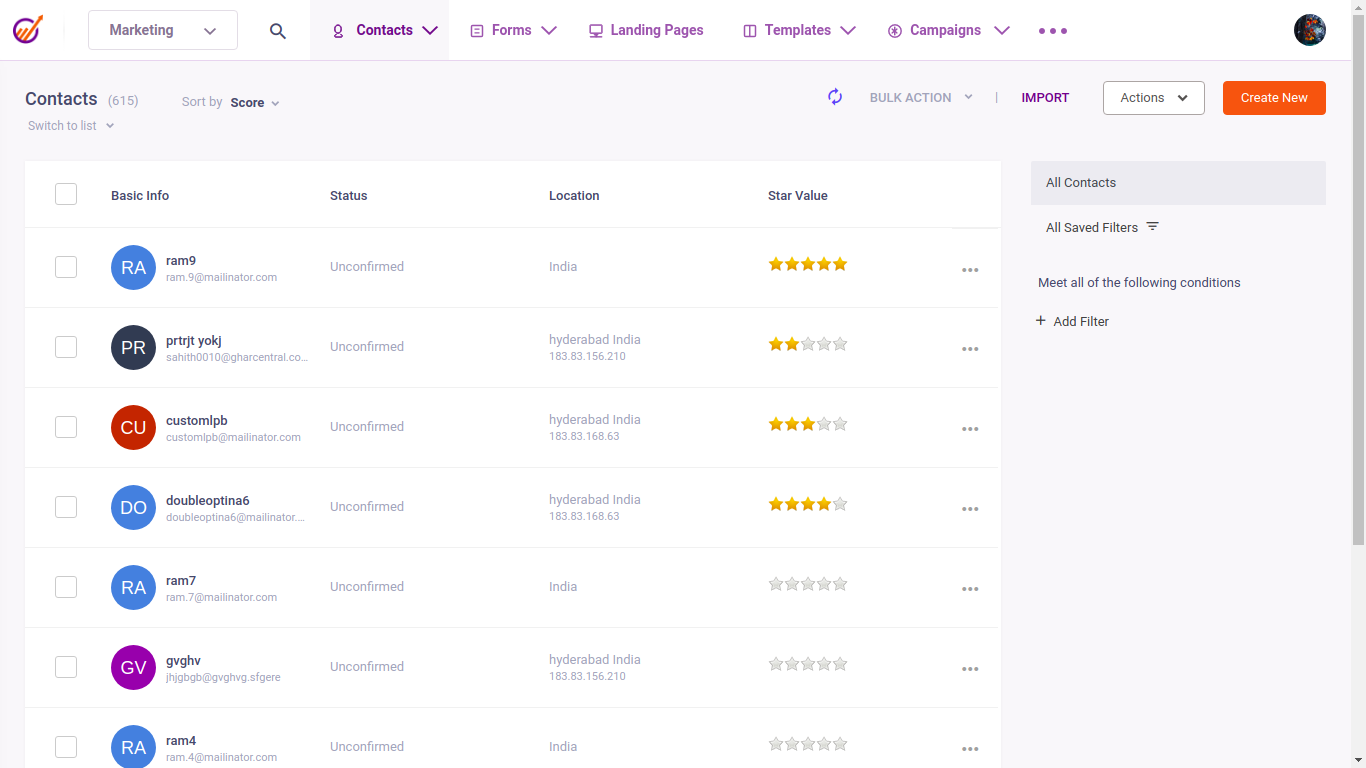
The limitations become noticeable as databases grow. Contact caps, storage limits, and restricted automation mean the free plan is best viewed as an early stage solution. One common theme in user reviews is that EngageBay "works well until volume increases."
EngageBay is a practical choice for startups that want lightweight CRM and email tools combined, but it is not designed for long term scale on the free tier.
Bitrix24
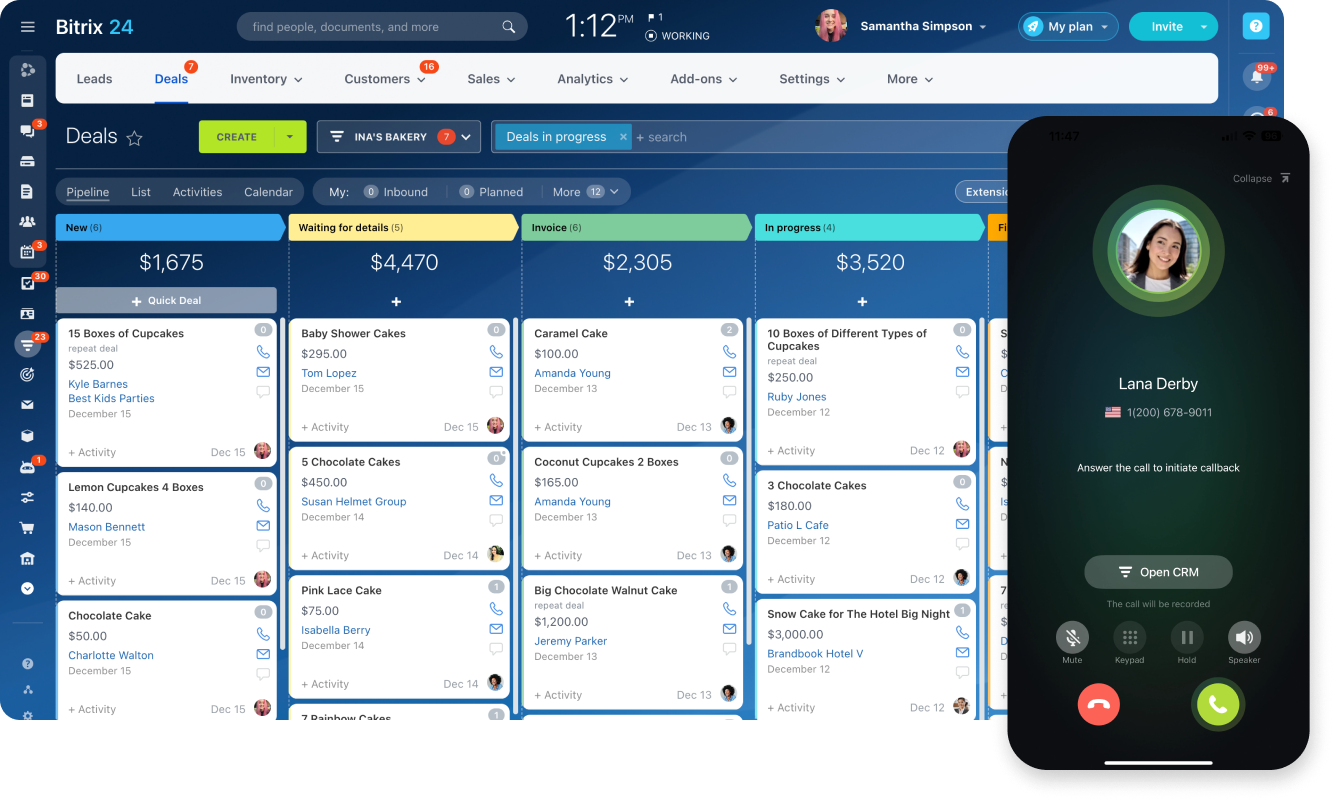
Bitrix24 is frequently included in free CRM roundups for one primary reason: it allows unlimited users and contacts at no cost. That alone makes it attractive for larger teams experimenting with CRM adoption.
Beyond CRM basics, Bitrix24 also includes internal chat, task management, and collaboration tools. In theory, it can act as an all in one workspace.
In practice, usability is the tradeoff. Many users describe the interface as overwhelming, especially for sales teams that just want to manage leads and deals. Reviews often mention a steep learning curve and unnecessary complexity for straightforward sales workflows.
Bitrix24 works best for teams that prioritize scale and internal collaboration over simplicity and sales focused design.
Victoria's Sales Database
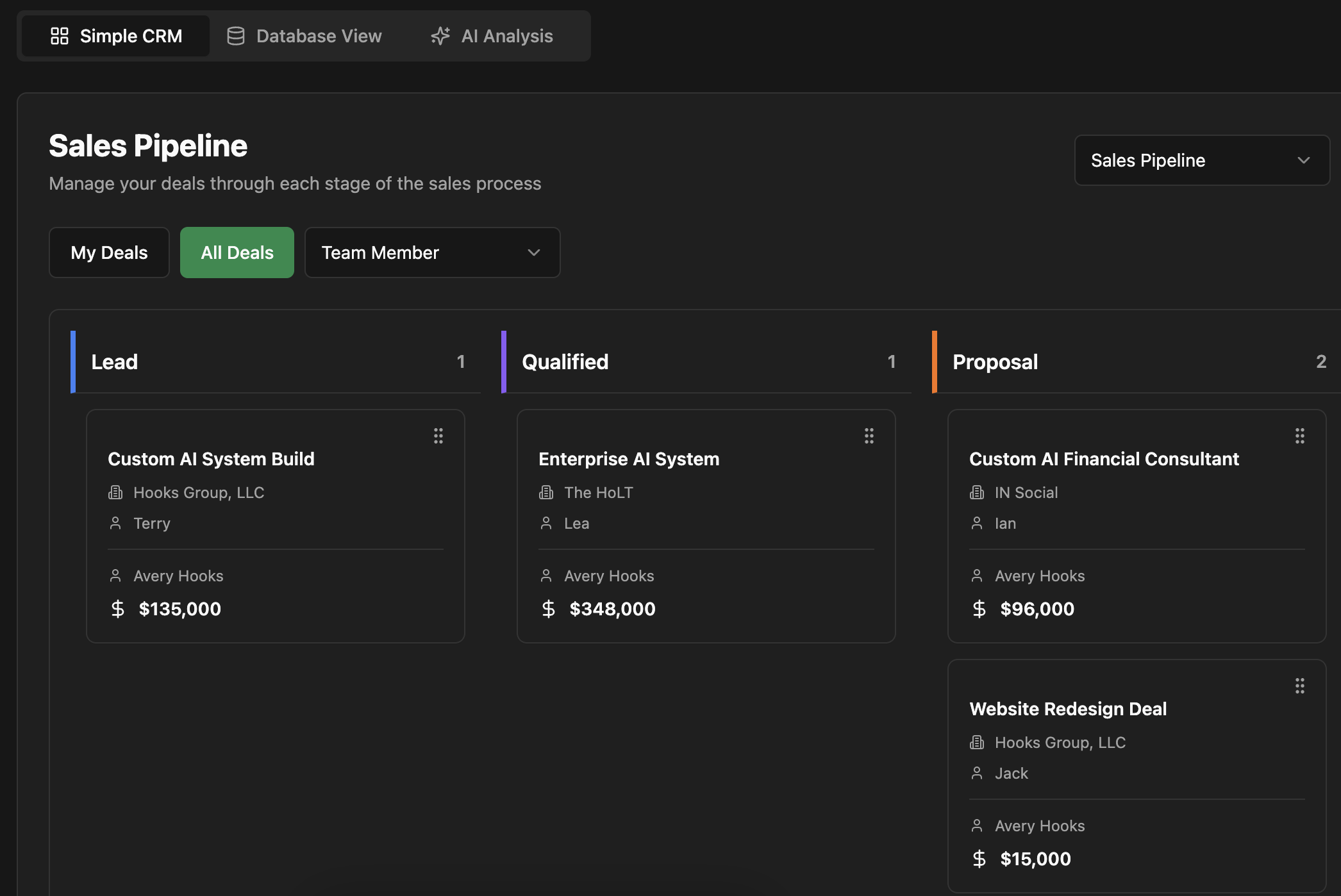
Victoria approaches CRM from a different angle. Instead of building a traditional CRM and adding features over time, the Sales Database was designed as a connected system from day one.
At its core, Victoria's free CRM gives you one place to see every lead, deal, and activity across your sales operation. Whether a lead comes from outbound, inbound, or manual entry, it all lives in the same system.
What stands out immediately is the experience. You can work in a simple, visual pipeline when you want speed and clarity, or switch to a database style view when you need deeper insight. Both views are fully connected, so you are never choosing between simplicity and control.
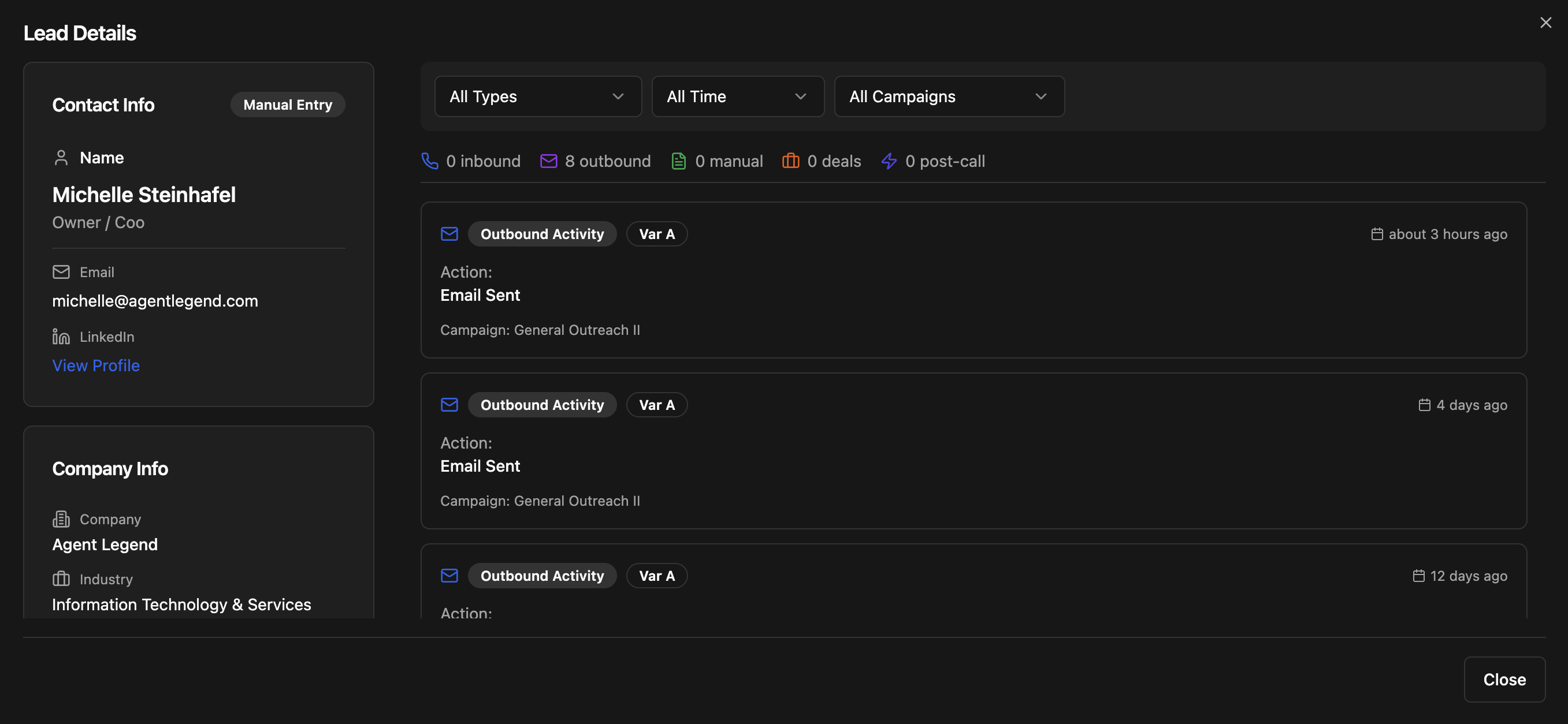
Every message, email, meeting, and response is automatically logged. There is no manual updating and no guessing whether your data is accurate. You open the CRM and see what is actually happening.
Pipelines and fields are fully configurable, but they stay out of the way unless you need them. The system is calm by design. It shows you what matters now, without overwhelming you with noise.
Because the Sales Database is connected to Victoria's AI SDR systems, it becomes more than just a place to store data. It becomes the operational layer for your revenue. Engagement, activity, and momentum are visible in real time, even on the free plan.
How Victoria Compares to Other Free CRMs
Most free CRMs give you a place to store contacts and deals. Victoria gives you a live system.
Where many tools rely on manual updates, Victoria logs activity automatically. Where others separate CRM from outreach, Victoria connects everything by default. And while most free plans restrict visibility or customization, Victoria keeps the core experience intact.
If your sales process involves outbound, inbound, or any form of automation, that difference matters.
Choosing the Right Free CRM in 2026
If you want a well known, general purpose CRM to get started, HubSpot is still a strong option.
If you want structured workflows and do not mind complexity, Zoho may fit.
If you want bundled marketing tools on a tight budget, EngageBay can work.
But if you care about clarity, real time activity, and a CRM that actually reflects how modern sales teams operate, Victoria's free Sales Database is worth serious consideration.
It is not free because it is limited. It is free because it is designed to grow with you.
Final Thoughts
Free CRMs in 2026 are better than they have ever been, but most still come with hidden ceilings.
Victoria removes many of those ceilings by offering a unified, connected CRM that stays useful as your sales operation evolves. Whether you are a solo founder, an agency, or a growing sales team, it gives you a clear view of your pipeline without forcing you into upgrades just to stay organized.
If you want a CRM that feels modern, calm, and genuinely helpful, it is one of the strongest free options available today.